150,000 tonnes of solar panels risk becoming waste – new roadmap shows how to keep them in use
2026.08.25

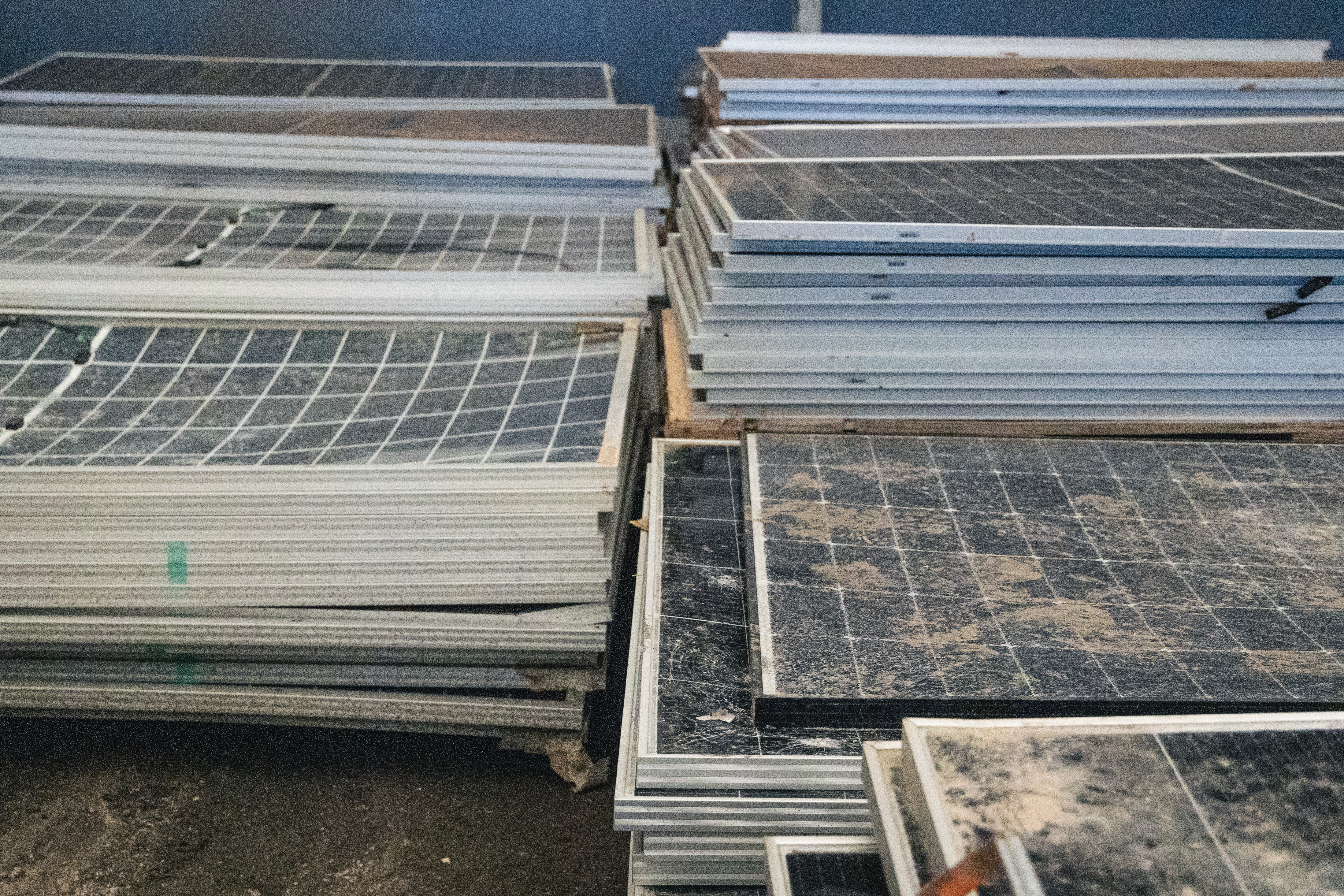
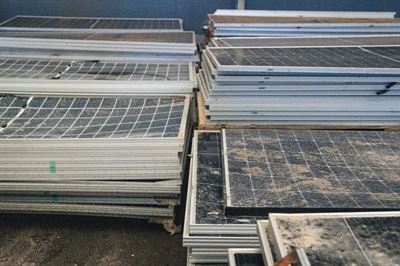
Panels taken out of service vary in their potential for continued use, repair, or recycling. The CircSolar roadmap describes how the condition of panels can be assessed and how they can be managed further along the value chain. Photo: Axfoundation
Sweden may need to manage up to 150,000 tonnes of end-of-life solar panels a year by around 2060. Axfoundation, KTH Royal Institute of Technology and partners across the value chain are now presenting Sweden’s first circular roadmap for solar panels, showing how panels and materials can stay in use for longer.
“Solar power is a key part of the energy transition, but today’s system is not designed to make the best use of panels when they are taken out of service. We need to extend the lifetime of functioning panels, ensure that valuable materials remain resources rather than become waste, and make extended producer responsibility work in practice, before the large future material flows emerge,” says Johanna Olofsson Behrman, Project Manager, Future Materials at Axfoundation.
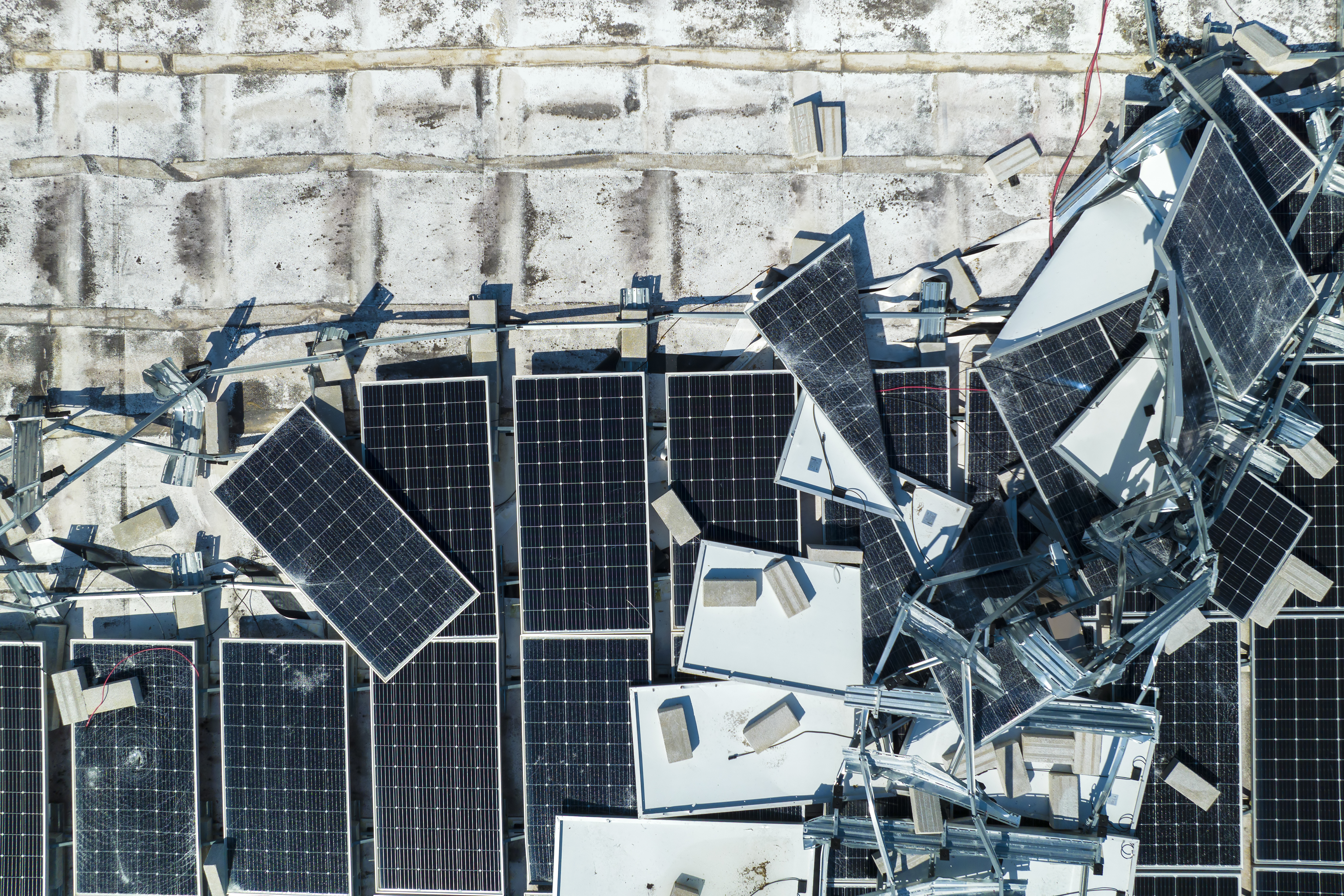
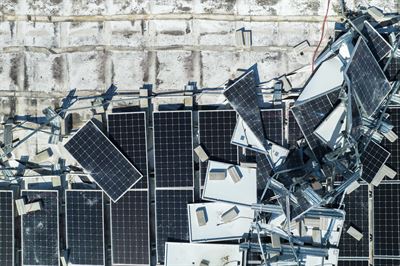
Solar power is one of Sweden’s fastest-growing sources of electricity, but the volume of end-of-life panels is also expected to rise sharply. Scenario analyses from RISE Research Institutes of Sweden indicate that Sweden may need to manage between 40,000 and 150,000 tonnes of end-of-life solar panels per year by around 2060 – at the upper end, more than the total amount of electrical and electronic waste collected in Sweden in 2024. The challenge is Europe-wide: according to the European Commission, the EU could face more than 20 million tonnes of cumulative end-of-life solar panels by 2050. At the same time, findings from the CircSolar project and research at KTH Royal Institute of Technology show that panels removed from service should not automatically be regarded as waste. Many are still functional and could potentially remain in use, while others need repair or recycling.
“Not everything that gets discarded has reached the end of its functional life. Our analysis shows that the solar panel “waste” stream includes non-functional but also repairable, reusable, and even unused panels. Without systematic quality and safety testing, we risk overlooking both the value these panels still hold and the most appropriate pathway for their future use”, Beatriz Pérez Horno, researcher at KTH Royal Institute of Technology.
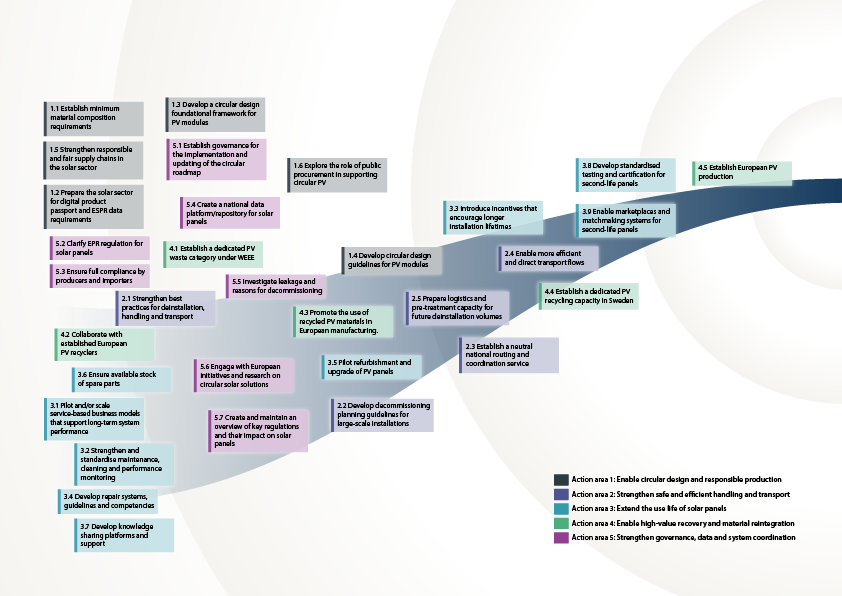
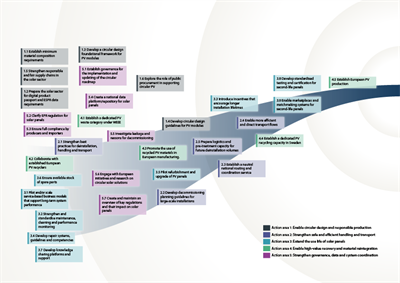
Based on these findings, Axfoundation, KTH Royal Institute of Technology, El-Kretsen, Svea Solar, Stena Recycling and REMONDIS have developed a circular roadmap for solar panels in Sweden. The roadmap identifies three key priorities: extend the lifetime of functioning panels, develop specialized recycling that keeps materials in circulation, and strengthen extended producer responsibility, traceability and data on future panel flows.
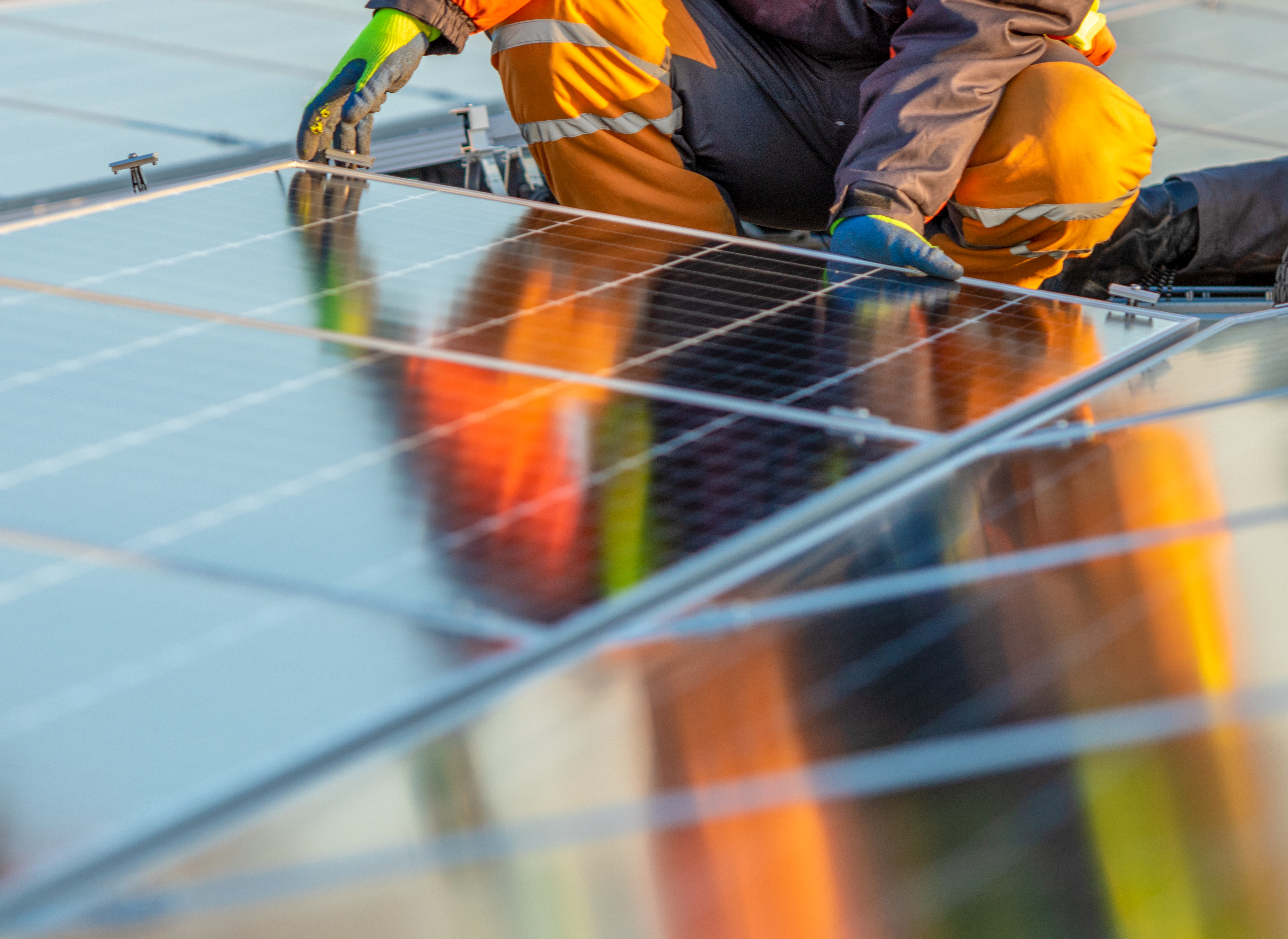
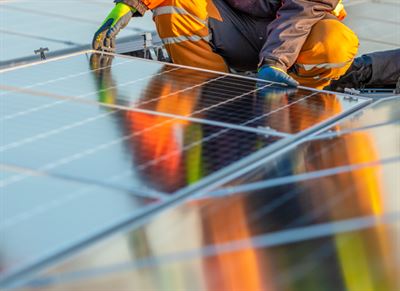
“The next step for the solar industry is to make it more attractive to retain, service and optimize functioning installations than to replace panels prematurely. This requires business models that reward long service life and strong performance over time,” says Alison Wren, Head of Residential Hardware, Svea Solar.
The roadmap also highlights the need for extended producer responsibility to function effectively in practice. All companies placing solar panels on the Swedish market need to contribute to their future collection and treatment on equal terms. Stronger traceability and better data on future panel flows are also needed to enable long-term planning.
“Extended producer responsibility is a fundamental part of a circular system for solar panels. When all actors take responsibility, it creates fair competition, stable financing for future collection and treatment, and better conditions for planning both collection and recycling,” says Kristina Eriksson, Business Area Manager, El-Kretsen.
Specialized recycling for solar panels is now being developed in Europe. According to the CircSolar roadmap, Sweden can build capacity step by step: initially by making use of specialized recycling capacity elsewhere in Europe and, as Swedish volumes increase, by investing in domestic infrastructure. Recycling companies such as REMONDIS and Stena Recycling are already preparing for these future material flows.
The roadmap also points to a need for coordinated action from government and public authorities to make it easier and more economically viable to reuse functioning panels, strengthen investment in high-value recycling, and ensure that extended producer responsibility works in practice.
The roadmap at a glance
CircSolar’s roadmap shows how Sweden can redirect a growing material flow from potential waste into resources that continue to create value.
- Extend the lifetime of functioning solar panels through maintenance, repair and reuse.
- Invest in specialized recycling for solar panels so that more materials can remain in circulation.
- Strengthen extended producer responsibility, traceability and data on future solar panel flows.
Source: Circular Roadmap for Solar Panels in Sweden, 2026.
About CircSolar
CircSolar is a collaborative project involving KTH Royal Institute of Technology, Axfoundation, Svea Solar, El-Kretsen, Stena Recycling and REMONDIS. The project is co-funded by Vinnova, Sweden’s innovation agency. Launched in 2023, CircSolar aims to accelerate the transition toward a more circular system for solar panels in Sweden.
earn more about CircSolar
Facts about solar panels
- Solar power is one of Sweden’s fastest-growing sources of electricity and accounts for approximately 4% of the country’s electricity generation. (SCB)
- A typical solar panel consists mainly of glass (67%), aluminum (16%), plastics (11%) and silicon (4%), as well as smaller amounts of metals such as silver and copper. (RISE)
- Scenario analyses by RISE indicate that Sweden may need to manage between 40,000 and 150,000 tonnes of end-of-life solar panels per year by around 2060. Larger end-of-life flows from Sweden’s installed solar panels are expected to begin emerging from around 2035. (RISE)
- Across the European Union, cumulative volumes of end-of-life solar panels are projected to exceed 20 million tonnes by 2050. (European Commission, JRC)
- Many panels removed from service are still functional and could potentially be reused, while others need repair or recycling. (KTH)
Related materials
- Circular Roadmap for Solar Panels in Sweden, 2026
- Summary of CircSolar Roadmap for Solar Panels in Sweden, 2026
- Policy Recommendations: Build a Circular System for the Solar Panels of the Future (in Swedish)
- Webinar 1 September 2026: Circular Roadmap for Solar Panels in Sweden (in Swedish)
Contact
- Linda Andersson, Media Relations, Axfoundation
+46 (0)73 087 15 70 - Johanna Olofsson Behrman, Project Manager Future Materials, Axfoundation
+46 (0)73 060 08 72 - Beatriz Pérez Horno, Researcher in Circular Economy, KTH Royal Institute of Technology
+46 (0)79 35 37 993 - SveaSolar
+46 (0)767 75 13 90 - Kristina Eriksson, Business Area Manager, El-Kretsen
+46 (0)8 54 521 686



All pressreleases


Updates on Future Materials
-

Wanted: A System for Longer Solar Panel Life
2025-11-24