
The Mineral Shift – Unlocking More Nutrients from Whole Grains
Tomorrow’s whole grains can provide nearly as much bioavailable iron and zinc as meat, thanks to a traditional grain processing method. In the Mineral Shift project, Axfoundation, Good Grains, MatLust Development Node and Warbro Kvarn have further developed hydrothermal treatment, a technique that increases the bioavailability of minerals such as iron and zinc in whole grains. This paves the way for a new generation of flavorful, nutrient-rich grain products.

Iron and zinc in grains are difficult for the body to absorb because they are bound to the antinutrient phytic acid. With hydrothermal treatment, the amount of bioavailable minerals can be more than four times higher.
The Issue
Reducing meat consumption and shifting toward a more plant-based diet with increased intake of whole grains and legumes is one of the most important changes for a sustainable food system. The risk of insufficient protein in plant-based diets is considered low; however, several researchers highlight the risk of deficiencies in certain minerals, such as iron and zinc. Today, 25 to 40 percent of girls and young women in Sweden have iron deficiency, and among those following a vegetarian diet, the figure is as high as 70 percent. In Europe, prevalence of anemia varies between countries, estimated at around 15 to 40 percent among women of reproductive age. In the United States, around 10 percent are affected.
Meat is a significant source of iron, but the grains we consume can contain more iron per unit of weight than the combined amount found in the meat, fish, and eggs we consume. The challenge is that iron and zinc in grains such as wheat, rye, oats, and barley are less bioavailable because they are bound to the antinutrient phytic acid.
We need to look back in time to move forward. We’re collaborating with a wide range of partners to develop the next generation of whole grain products.
– Veronica Öhrvik, Project Manager, Future Food, Axfoundation
Our Solution
In the Mineral Shift project, a wide range of stakeholders collaborated to develop the next generation of flavorful and healthy whole-grain products made from barley, rye, and wheat. An innovative method developed by the researchers behind the company Good Grains, known as hydrothermal treatment, has been at the core of the project. In simplified terms, this technique involves soaking grains under carefully controlled conditions of time and temperature. The process makes naturally occurring minerals in the grain, such as iron and zinc, more bioavailable for the body to absorb.
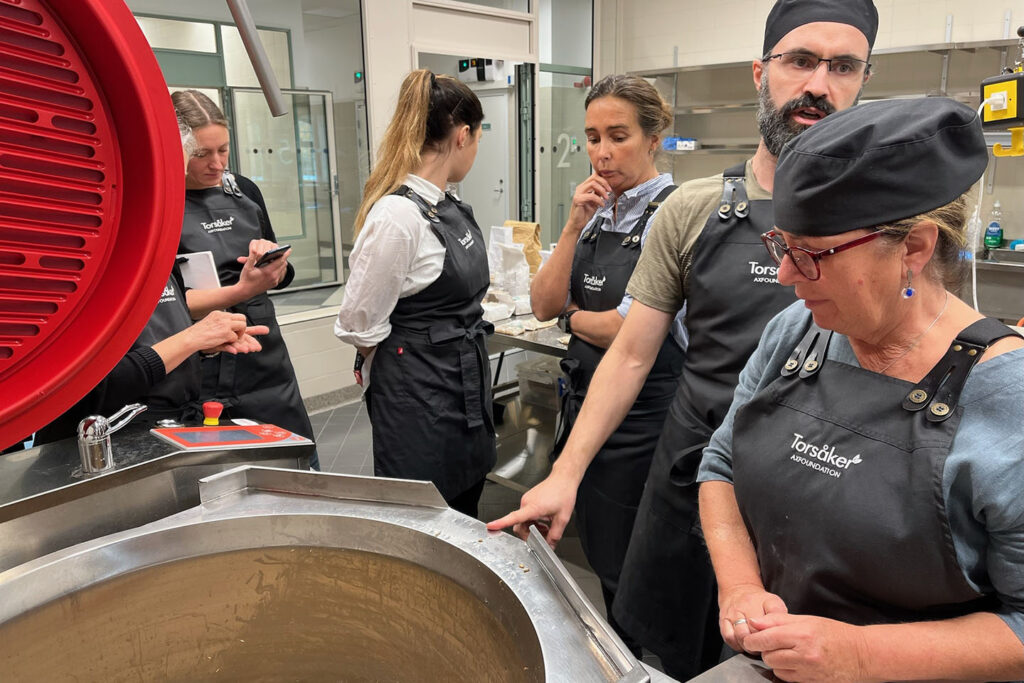
To optimize the technique, a pilot plant was established at Torsåker Farm. At the same time, the next generation of grain products was developed in test kitchens.
A large share of the nutrients in untreated grains is locked within the grain structure. By optimizing hydrothermal treatment, up to 99 percent of phytic acid can be broken down. This means that the amount of bioavailable iron and zinc can increase by approximately four times compared to untreated grains. As a result, mineral absorption in plant-based meals can increase severalfold, reaching levels that are nearly comparable to those from meat.
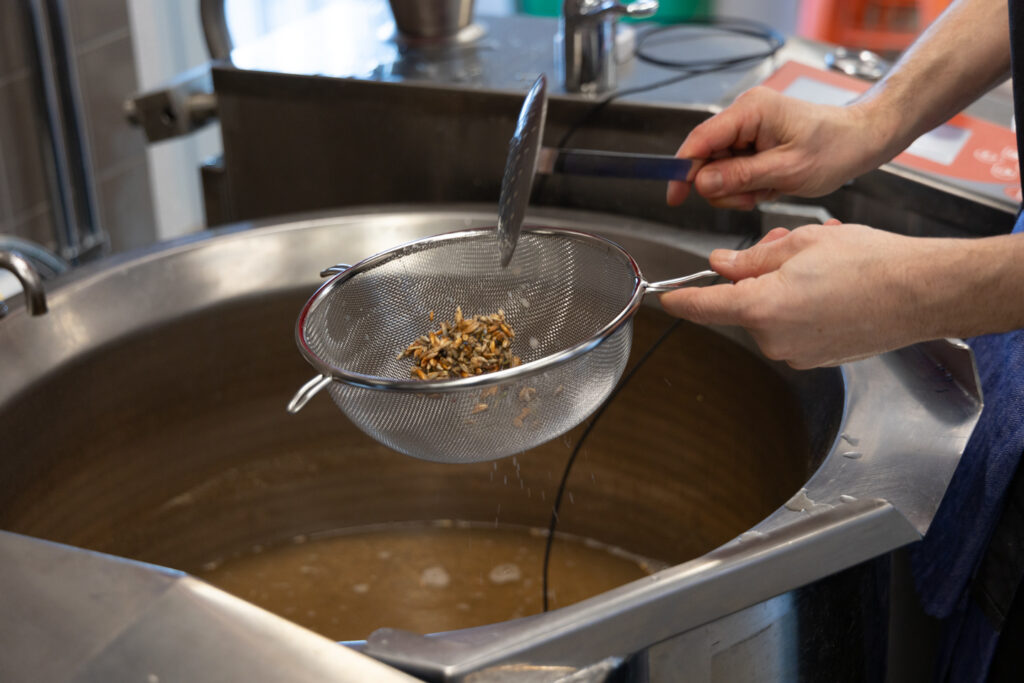
Up to 99 percent of phytic acid can be broken down.
Good Grains’ treatment technique is based on traditional cooking methods used for centuries but has been refined and optimized through decades of research and modern technology. The treatment works for most grains and leaves them relatively unchanged, allowing them to be ground, crushed, or flaked in a conventional mill.
The Mineral Shift project has worked with Swedish-grown barley and rye, as well as wheat from heritage varieties. An important subgoal of the project has been to increase demand for these grains, both to improve the profitability of Swedish grain producers and processors and to contribute to the national environmental objective of a diverse agricultural landscape.

The treatment works for most grains and leaves them relatively unchanged.
Did you know…?
- Whole-grain intake is low globally: In Sweden, 9 out of 10 people eat less whole grain than recommended. Across Europe, whole-grain intake varies widely between countries, for most counties estimated at 10 to 30 grams per day and below recommended levels. In the United States, almost 98 percent of the population does not meet whole-grain intake recommendations.
- Iron deficiency remains widespread: In Sweden, 25 to 40 percent of girls and young women have iron deficiency, rising to around 70 percent among those following vegetarian diets. In Europe, prevalence of anemia varies between countries, estimated at around 15 to 40 percent among women of reproductive age. In the United States, around 10 percent are affected.
- The grains we consume actually contain more iron than the meat, fish, eggs, and dairy consumed. The problem is that iron and zinc in grains like wheat, rye, oats, and barley are difficult for us to absorb because they are bound to the antinutrient phytic acid. Other factors that affect iron absorption include the body’s need for iron as the primary factor, but also the form in which the iron is found, the presence of other nutrients, and the so-called ‘meat factor’ in meat and fish, which enhances absorption. Increasing the amount of plant-based foods also increases the need for zinc, as compounds like phytic acid and tannins can impair zinc absorption.
- Hydrothermal treatment improves mineral absorption: It is a technique that enhances the bioavailability of minerals in grains through soaking and heating under controlled conditions. Optimized, it can break down up to 99 percent of phytic acid. This makes significantly more iron, zinc, and other minerals available for absorption, in some cases approaching levels seen in animal-based foods. The method builds on traditional practices with millennia-old origins and has been further developed through modern research, including studies at Chalmers University of Technology. Good Grains has refined and validated the technique through analysis of phytic acid levels.
Our Work
During the project, a pilot facility was established by Good Grains at Torsåker Farm, Axfoundation’s center for sustainable food and material systems. The hydrothermal treatment method was optimized with regard to profitability and sustainability parameters such as water and energy consumption.
The pilot facility has since been scaled up to an industrial level and has been in full operation at Warbro Kvarn since 2024. In this process, Axfoundation has contributed expertise in scaling and business models based on previous successful innovations.
In the test kitchen, Axfoundation drives the development of new products made from hydrothermally treated grains. In Södertälje Municipality’s test bed, new ingredients and dishes have also been explored, with the aim of bringing more sustainable food products to market. At the same time, MatLust Development Node has worked to increase demand for these products and identify suitable producers.
At Torsåker Farm, a vortex (impact) mill has enabled testing of whole-grain flour and has been used in collaboration with Region Stockholm within health care and elderly care. In the scaling phase, this will be replaced by the significantly more efficient method of micronization.
Almost everyone would benefit from eating more whole grains. Hydrothermal treatment can make minerals such as iron and zinc in grains easier for the body to absorb. This method paves the way for a whole new generation of whole-grain products. Råggyberry is an example of how research, practical innovation, and collaboration across the food supply chain can contribute to healthier foods and improved public health.
– Veronica Öhrvik, Project Manager, Future Food, Axfoundation
Results
The project has developed several products based on hydrothermally treated barley, rye, and wheat. The result is flavorful, sustainable, and nutrient-rich food products for both consumers and the food service sector.
The Smart Snack Råggyberry
Together with project partners from across the entire value chain, Axfoundation has developed a substantial and nutritious snack, Råggyberry. It is made with hydrothermally treated whole-grain rye, yogurt, and upcycled ingredients from grill cheese production at Falköpings Mejeri. The snack is topped with a compote of apple and blackcurrant.
In collaboration with Urban Deli, Dagab, and Generation Pep, the product was tested in 2024 by around 2,000 children and was sold for a limited period at Urban Deli, Hemköp, and Willys. In 2026, the product is being commercialized as Dagab scales up production and makes Råggyberry available across Axfood’s retail network.
From Crispbread to Pancakes
A wide range of meals and products have been tested at Torsåker Farm, from granola and porridge to pasta, pancakes, crispbread, and cookies, with very good results.
Barley Bulgur
In collaboration with MatLust Development Node, schoolchildren in Södertälje have tested different products made from barley, such as Swedish bulgur and tabbouleh. These products have received very positive feedback and are now marketed as “Barley Bulgur” by Good Grains.

The Smart Snack Råggyberry

From Crispbread to Pancakes

Barley Bulgur
The Whole Grain Initiative (Fullkornsfrämjandet)
The Whole Grain Initiative (Fullkornsfrämjandet) works to increase both knowledge of and access to whole grains – an important part of the transition to more sustainable and healthy food systems. By bringing together stakeholders across the food value chain, the initiative drives practical solutions that make it easier for more people to choose whole grains in their everyday lives. Since 2026, Axfoundation has been a partner in the initiative.
Mini Glossary
- Antinutrients are naturally occurring substances in grains, legumes, and nuts. One such substance is phytic acid, which inhibits the body’s absorption of minerals. In grains, antinutrients are primarily found in the bran, which also contains most of the grain’s minerals.
- Bioavailability is the proportion of a nutrient that the body can absorb and use for essential physiological processes.
- Whole grains refer to grains that contain all parts of the kernel, including the bran, germ, and endosperm, whether intact, cracked, or milled. Common sources include crispbread, rye bread, and oatmeal. Diets rich in whole grains are associated with a lower risk of type 2 diabetes and cardiovascular disease.
Partners
The Mineral Shift project was led by MatLust Development Node in collaboration with Axfoundation, Good Grains, and Warbro Kvarn, with funding from Sweden’s innovation agency Vinnova. The Division of Food and Nutrition Science (FNS) at Chalmers University of Technology, Axfood, Dagab, Urban Deli and Middagsfrid have also contributed to the project.
Contact

Projects within Future Food




Updates on Future Food
-

Could Hemp Seeds be the Future of Food?
2026-03-30
-

A Planetary Menu for Everyday Swedish Meals
2025-10-22
-

Can PFAS Save the Baltic Sea?
2025-04-22
-

More of the Plant Should Become Food
2025-02-24


